Prepared Home
Building a 6-Month Food Storage System for Malaysian Families


 Share this Article:
Building a 6-Month Food Storage System for Malaysian Families
Food storage does not need to be wasteful, expensive, or complicated. With the FIFO method — store what you use, use what you store — Malaysian families can build a practical food reserve gradually while keeping normal meals fresh and familiar.
What This Guide Covers
- How FIFO food storage prevents waste and overspending
- Best Malaysian staples for tropical storage
- Month-by-month food storage building plan
- Humidity, insect, mold, and rotation strategies
Why Malaysian Families Avoid Food Storage
Many Malaysian households avoid food storage because they worry that food will expire, attract insects, spoil in humidity, take too much space, or cost too much upfront.
Those concerns are understandable, but they usually come from thinking of food storage as a separate emergency stockpile. The better method is to turn your normal pantry into a rotating reserve.
- It does not need to create waste: You store foods you already eat.
- It does not require panic buying: You build gradually during normal grocery trips.
- It works with Malaysian staples: Rice, oil, canned goods, noodles, flour, sugar, and milk powder store well when protected.
- It protects against price spikes: Stored staples reduce pressure when prices rise suddenly.
The FIFO Principle: Store what you use, and use what you store. The oldest item gets used first. New purchases go to the back. This keeps food fresh while building resilience.
Understanding FIFO
FIFO means “First In, First Out.” It is the simplest and most practical food storage system for Malaysian households because it turns emergency preparedness into normal kitchen management.
Why Traditional Emergency Food Storage Fails
- Families buy special emergency food they rarely eat.
- The food sits untouched for months or years.
- Expiry dates pass unnoticed.
- The family feels waste and stops preparing.
Why FIFO Works
- You buy normal groceries your family already eats.
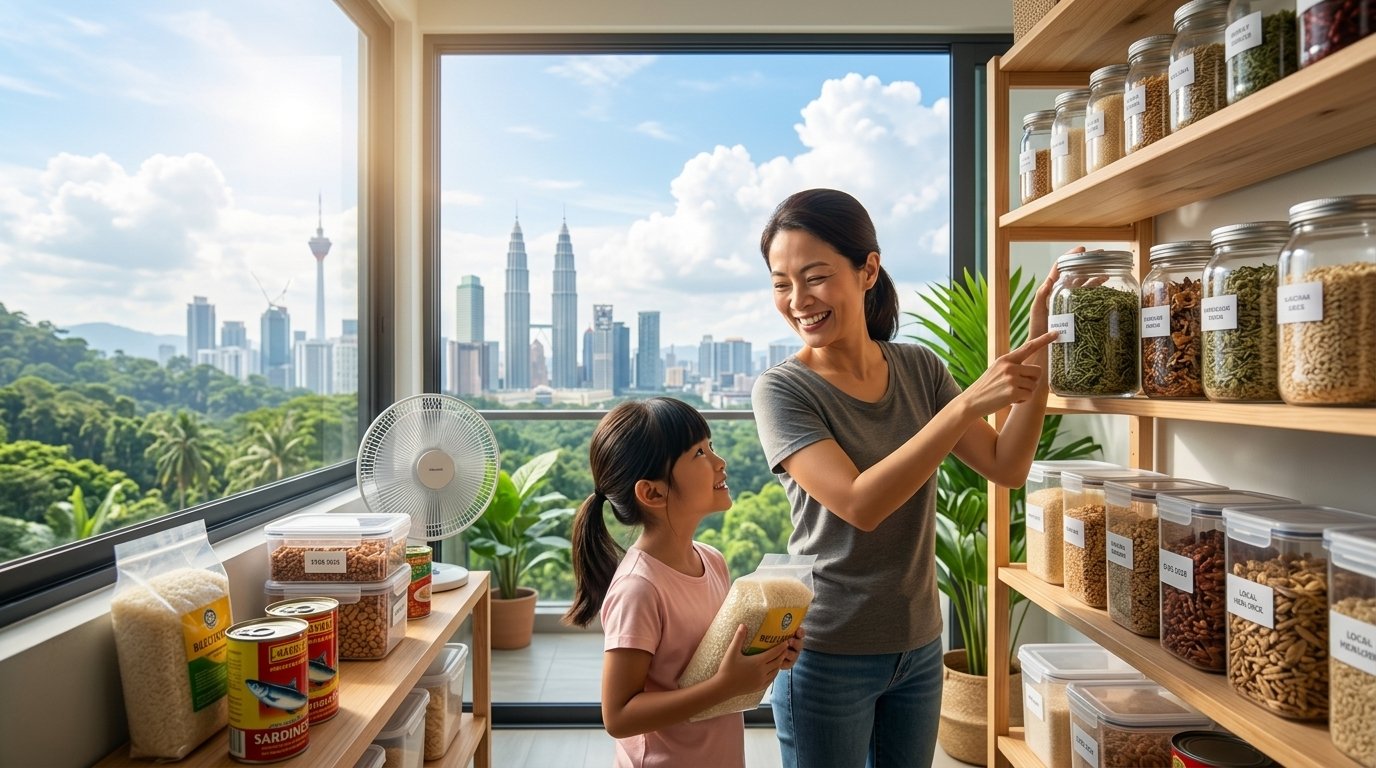
- You store them in a labelled, organised system.
- You cook from the oldest stock first.
- You replace used items during normal shopping.
- Your pantry becomes both daily supply and emergency reserve.
The Math: Why 6 Months Can Be Built Gradually
Food storage does not mean buying six months of groceries in one weekend. It means adding extra staples slowly while rotating what you already consume.
For example, when rice, oil, canned sardines, or milk powder go on sale, buy a little extra. Use the older stock first. Replace it when prices are favourable.
Over time, your household builds a buffer without changing what you eat or wasting food.
Foods That Store Well in Tropical Malaysia
Excellent Long-Term Staples
- Rice: Core Malaysian staple. Store in sealed containers away from heat and moisture.
- Cooking oil: Keep sealed, cool, and away from sunlight.
- Canned goods: Sardines, tuna, beans, vegetables, soups, and fruits are useful and familiar.
- Instant noodles: Cheap, compact, familiar, and easy to prepare.
- Flour: Useful for cooking and baking, but must be protected from insects.
- Sugar and salt: Long shelf life when kept dry and sealed.
- Powdered milk: Important for children, elderly family members, and emergency nutrition.
- Peanut butter: High-calorie, shelf-stable, and useful for morale.
- Biscuits and crackers: Quick energy and no-cook option.
- Pasta, noodles, beans, lentils: Versatile pantry foods with strong storage value.
- Tea, coffee, and chocolate powder: Comfort items matter during stressful periods.
Moderate Storage Life
- Condensed milk
- Tomato paste and sauces
- Spices
- Refined vegetable oils
- Opened dry goods that need faster rotation
Use Carefully in Humidity
- Whole grains that can go rancid faster
- Nuts without proper sealing
- Dried fruit in poor packaging
- Any item that absorbs moisture easily
Building Your 6-Month Storage Month by Month
Build gradually. This avoids overspending, panic buying, and waste.
Month 1: Focus on staples — rice, cooking oil, and canned protein.
Month 2: Add carbohydrates — pasta, flour, noodles, sugar, oats, and biscuits.
Month 3: Add proteins and dairy — powdered milk, peanut butter, canned beans, sardines, tuna, and lentils.
Month 4: Add flavour and morale items — salt, spices, tea, coffee, chocolate powder, sauces, and crackers.
Month 5: Diversify canned goods — vegetables, fruits, soups, ready-to-eat meals, and family favourites.
Month 6: Fill gaps, review quantities, and begin steady FIFO rotation.
Storage Containers for Tropical Conditions
Humidity, heat, insects, and mold are the main enemies of Malaysian food storage.
Best: Food-Grade Plastic Buckets with Sealed Lids
Best For: Rice, flour, sugar, beans, and bulk dry goods.
Why It Works: Airtight sealing reduces moisture and insect exposure.
Good: Glass Jars with Sealed Lids
Best For: Spices, smaller dry goods, coffee, tea, and opened packets.
Why It Works: Easy to inspect and strong against insects when sealed well.
Good: Metal Tins with Tight Lids
Best For: Powdered milk, biscuits, spices, and smaller packaged goods.
Why It Works: Opaque, durable, stackable, and protective from light.
Storage Location
- Cool: Avoid direct sunlight, hot ceilings, and roof spaces.
- Dry: Keep away from bathrooms, sinks, leaks, and damp walls.
- Elevated: Store off the floor to reduce moisture and pest exposure.
- Organised: Label by item and purchase date.
- Accessible: FIFO only works if the food is easy to reach and use.
Implementing FIFO in Your Kitchen
FIFO works best when your pantry is arranged so old items naturally get used first.
The FIFO Shelf System
- Front: Items to use now.
- Middle: Items to use next.
- Back: Newer backup stock.
- Bulk containers: Rice, flour, beans, sugar, and other staples.
Monthly Rotation Checklist
- Check the oldest items first
- Move near-expiry items into the weekly meal plan
- Inspect containers for cracks, pests, or moisture
- Check dry goods for insects or clumping
- Replenish items below your target quantity
Shopping Strategy for Malaysian Families
- Buy extra during sales: Add one or two extra staples when prices are favourable.
- Compare RM per kilogram: Bigger packs may be cheaper, but only buy what you can store properly.
- Use familiar brands: Emergency food must be food your family will actually eat.
- Avoid overbuying fragile items: Oils, nuts, and opened dry goods need faster rotation.
- Keep budget discipline: Build storage over months, not through panic spending.
What a 6-Month Supply Can Include
Basic Family Staples
- Rice
- Cooking oil
- Canned fish, beans, vegetables, and soups
- Instant noodles
- Flour, sugar, salt, and spices
- Powdered milk
- Peanut butter
- Biscuits and crackers
- Pasta and dry noodles
- Dried beans and lentils
- Tea, coffee, and chocolate drinks
Protecting Food from Tropical Threats
Against Humidity
- Use airtight containers
- Add food-safe desiccants where suitable
- Keep items away from damp walls and floors
- Replace damaged packaging quickly
Against Insects
- Seal containers completely
- Inspect new dry goods before storage
- Keep shelves clean and free of crumbs
- Never leave opened packets exposed
Against Mold
- Never store damp items
- Keep storage areas ventilated
- Discard food with visible mold or unsafe odour
Against Rancidity
- Store oils in cool, dark places
- Rotate oils faster than dry grains
- Keep bottles sealed until use
Using Your Storage Strategically
Food storage is not only emergency insurance. It is also household financial protection.
- Price spike hedge: Stored staples protect you when prices rise suddenly.
- Supply disruption buffer: Your household is less affected by temporary shortages.
- Job loss protection: Stored food reduces pressure during income disruption.
- Health crisis support: If someone is sick, your family can stay home without urgent grocery runs.
Starting from Zero
- Week 1: Clear and clean one cupboard or storage shelf.
- Week 2: Buy a few sealed containers.
- Week 3: Add extra rice, oil, and canned goods.
- Week 4: Add noodles, flour, sugar, powdered milk, and biscuits.
- Month 2: Label everything and set up FIFO rotation.
- Month 3: Use older items in normal cooking and replace them.
- Months 4–6: Continue adding, rotating, and filling gaps.
The Moment It Works: When rice, oil, or canned food prices rise, your stored supply gives your family time, choices, and financial breathing room.
Get Your 6-Month Food Storage Worksheet
Complete shopping list organised by month, FIFO tracking sheet, container labels, tropical storage checklist, and price comparison guide for Malaysian staples.
Download Free Resources
Store what you eat. Eat what you store.
By Dr. Preppers, your emergency preparedness guide.
Presented by Preppers MY · www.preppersmy.com
Suggested Reads

Car Emergency Kit for Malaysian Highways | Monsoon & Breakdown Preparedness
Reading Time: 4 minutes
Apr
From Classroom to Water Independence | Building a 6-Month Water Supply in Malacca
Reading Time: 5 minutes
Apr

El Niño Is Coming Back — And This Time, It Could Be the Worst Malaysia Has Ever Seen
Reading Time: 5 minutes
May
5 Economic Threats in 2026 That Could Change Your Life in Malaysia — And What to Do About It Now
Reading Time: 4 minutes
May


Preparing for Tropical Diseases During Emergencies | Malaysian Family Guide
Reading Time: 4 minutes
Apr

Blackout Ready: Why Every Malaysian Home Needs a Portable Power Station in 2026
Reading Time: 5 minutes
May

Building Prepper Community in Malaysia | Resilience Through Neighbours & Local Networks
Reading Time: 5 minutes
Apr
Emergency Shelter Building in Tropical Rainforest | Malaysian Jungle Survival Guide
Reading Time: 5 minutes
Apr

Financial Preparedness for Malaysian Families | Cash, Inflation & Currency Protection
Reading Time: 5 minutes
Apr


90-Day Preparedness Plan for Malaysian Families | Build Real Resilience
Reading Time: 3 minutes
May

First Aid for Remote Areas in Malaysia | Austere Medicine Survival Guide
Reading Time: 5 minutes
Apr

Nik Muhammad Hafiz: Building Malaysia’s Preparedness Movement | Preppers MY
Reading Time: 4 minutes
May

Home Solar Installation for Malaysian Families | Energy Independence Guide
Reading Time: 5 minutes
Apr

Preparedness Through Gardening | Building Family Resilience Naturally
Reading Time: 4 minutes
Apr

South China Sea Geopolitical Crisis | How Malaysian Families Can Prepare
Reading Time: 5 minutes
Apr

Home Borewell Installation for Water Independence | Secure Your Family’s Water Supply
Reading Time: 5 minutes
Apr
Complete Home Medical Kit for Malaysian Tropical Diseases | Emergency Preparedness
Reading Time: 5 minutes
Apr

Water Filter Comparison for Malaysian Water Sources | Best Emergency Filters
Reading Time: 5 minutes
Apr

Water Purification for Tropical Climates | Safe Drinking Water Guide for Malaysia
Reading Time: 4 minutes
Apr

Home Water Storage in High Humidity Environments | Malaysian Water Guide
Reading Time: 5 minutes
Apr

72-Hour Bug Out Bag for Malaysian Families | Tropical-Ready Evacuation Guide
Reading Time: 6 minutes
Apr
Suggested Related Products