Survival Skills
First Aid for Remote Areas in Malaysia | Austere Medicine Survival Guide


 Share this Article:
First Aid for Remote Areas in Malaysia
When you are injured in remote jungle, mountain, coastal, or rural terrain, professional help may be hours away. This guide explains the first-aid priorities, skills, and supplies Malaysian families and outdoor groups should understand before going remote.
What This Guide Covers
- Remote first-aid priorities when help is delayed
- CPR, bleeding control, tourniquets, and wound care
- Heat illness, fractures, infections, bites, and stings
- Remote area first-aid kit planning and training steps
Why Remote Area First Aid Is Different
First aid taught in most urban settings assumes professional help is close. Apply pressure, call an ambulance, and transfer the patient quickly. That approach changes when you are deep in a Malaysian forest reserve, mountain trail, island route, rural plantation, or remote kampung road.
In remote areas, you may be the only help available for hours. Mobile coverage may be unreliable. Evacuation may require walking, carrying, boat transfer, 4WD access, or helicopter rescue if available.
Your goal is not to replace doctors. Your goal is to keep someone alive, reduce deterioration, prevent infection, and buy time until proper care is reached.
Reality: A remote hiking accident can mean hours before evacuation. A jungle wound can become infected quickly. Heat illness can worsen fast in Malaysia’s humidity. Training and a proper kit matter before the emergency happens.
The Golden Hour Concept, Extended
In urban emergency medicine, the “golden hour” often refers to the first hour after injury when rapid medical care can save lives. In remote settings, that first hour may stretch into an extended survival window of many hours or even days.
- Immediate priorities: Control severe bleeding, manage airway, support breathing, and prevent collapse.
- Short-term priorities: Reduce shock, manage pain, protect wounds, immobilise injuries, and monitor condition.
- Longer-term priorities: Prevent infection, maintain hydration, keep patient warm or cool as needed, and prepare evacuation.
Critical Skill 1: CPR
If someone collapses, is not breathing normally, and has no clear signs of circulation, CPR may be the only intervention keeping oxygen moving through the body while waiting for help.
The DRSABCD Sequence
- Danger: Check that the scene is safe before approaching.
- Response: Tap shoulders and speak loudly to check responsiveness.
- Send for help: Call 999 if possible and activate your group emergency plan.
- Airway: Open the airway and clear visible obstruction if safe.
- Breathing: Look, listen, and feel for normal breathing.
- Circulation / Compressions: If not breathing normally, begin chest compressions.
- Defibrillation: Use an AED if available.
CPR: Practical Reminder
Compression Rate: Aim for 100–120 compressions per minute.
Hand Placement: Place hands in the centre of the chest.
Compression Depth: Push hard and allow full recoil.
Rescue Breaths: If trained and willing, give rescue breaths. If not, hands-only CPR is still valuable.
Continue: Keep going until help arrives, the person recovers, the scene becomes unsafe, or you are physically unable to continue.
Critical Skill 2: Severe Bleeding Control
Uncontrolled bleeding can kill within minutes. Remote first aid must prioritise major bleeding immediately.
When to Consider a Tourniquet
- Severe bleeding from an arm or leg that direct pressure cannot control
- Partial or complete limb amputation
- Crush injury with major bleeding
- Arterial bleeding that spurts or rapidly soaks dressings
Do not use a tourniquet for minor cuts or bleeding that stops with firm direct pressure.
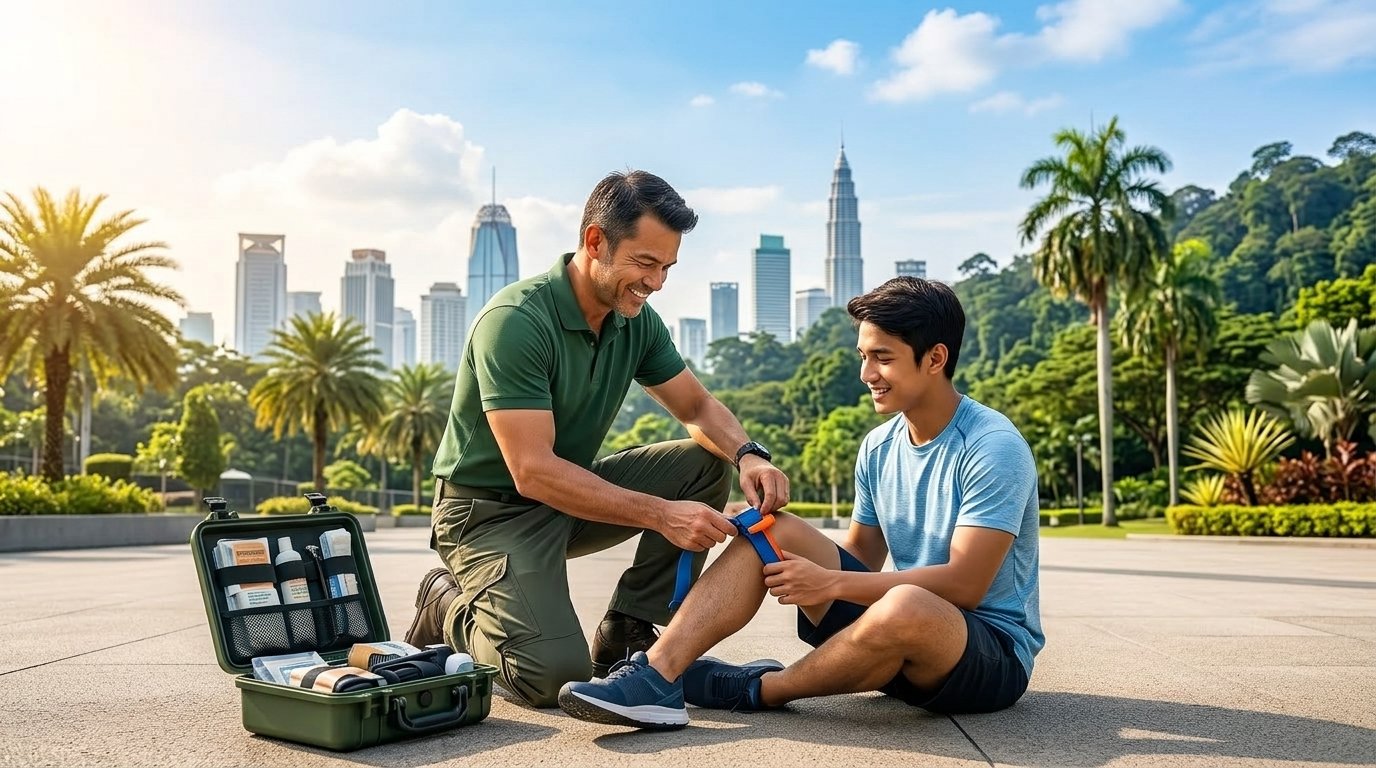
Tourniquet Application Basics
Position: Place the tourniquet above the wound, between the wound and the heart.
Tightness: Tighten until bleeding stops. A loose tourniquet is ineffective.
Time: Record the time of application clearly.
Do Not Remove: Once applied for life-threatening bleeding, leave it for medical professionals unless trained protocols say otherwise.
Training Matters: Practice with a proper trainer before relying on this skill outdoors.
Critical Skill 3: Wound Care in Remote Areas
In Malaysia’s hot, humid, and biologically active environment, wounds can become infected quickly. Dirt, plant matter, insects, floodwater, and sweat all increase contamination risk.
Wound Assessment
- Minor cuts: Clean, disinfect, dress, and monitor.
- Moderate lacerations: Clean thoroughly and close with strips only when appropriate.
- Severe wounds: Control bleeding, protect the wound, and evacuate.
- Puncture wounds: High infection risk. Clean carefully and seek medical review.
Closing a Wound Without Stitches
Step 1 — Clean: Rinse with clean water and remove visible debris.
Step 2 — Stop Bleeding: Apply direct pressure with clean gauze or cloth.
Step 3 — Disinfect: Use iodine, chlorhexidine, or other suitable antiseptic.
Step 4 — Protect: Apply antibiotic ointment if appropriate and cover with sterile dressing.
Step 5 — Approximate: Use butterfly strips or adhesive wound closure strips only for suitable clean wounds.
Step 6 — Monitor: Watch for redness, swelling, warmth, pus, fever, or worsening pain.
Austere Medicine: Common Remote Injuries
Fractures & Sprains
Without X-rays, assume severe pain, deformity, swelling, or inability to bear weight may indicate fracture. Immobilise and evacuate.
- Rest: Stop activity and prevent further movement.
- Immobilise: Use splints, slings, trekking poles, branches, or padding.
- Elevate and compress: Reduce swelling where appropriate.
- Pain control: Use medicines safely according to label instructions and personal medical history.
Heat Illness
Malaysia’s heat and humidity increase risk during hiking, cleanup, training, and evacuation.
- Heat exhaustion: Heavy sweating, dizziness, nausea, weakness, headache, and cramps.
- Heatstroke: Confusion, collapse, seizures, very high temperature, or altered behaviour. Treat as life-threatening.
- Immediate action: Move to shade, cool the body, remove excess clothing, and sip water or ORS if conscious.
Tropical Infections
Warm, wet environments encourage bacterial growth. Keep wounds clean, dry, dressed, and monitored closely.
- Clean wounds early and thoroughly
- Change dressings daily or when wet or dirty
- Seek help if fever, pus, spreading redness, or severe pain develops
- Use antibiotics only with proper medical guidance
Insect Bites & Stings
- Mosquitoes: Use repellent and long clothing to reduce dengue and malaria risk.
- Stings: Remove visible stingers, apply cold compress, and monitor for allergy.
- Anaphylaxis: Difficulty breathing, facial swelling, collapse, or widespread hives require urgent emergency response.
- Leeches: Remove gently, clean the wound, and cover to reduce infection risk.
Your Remote Area First Aid Kit
Essential Items
- Commercial tourniquet
- Sterile gauze and trauma dressings
- Elastic bandages and triangular bandage
- Antiseptic solution or wipes
- Antibiotic ointment where appropriate
- Butterfly strips or wound closure strips
- Medical tape and scissors
- Gloves and hand sanitiser
- Thermometer
- Paracetamol and suitable pain relief
- Antihistamine
- ORS packets
- Tweezers and safety pins
- CPR face shield or barrier
- Emergency blanket
Skills You Must Learn Before Going Remote
Reading about first aid is not enough. Skills must be practiced before panic, rain, darkness, blood, and exhaustion enter the situation.
- CPR course: Take a recognised Malaysian CPR course and refresh regularly.
- Basic first aid: Learn bleeding control, wound care, fracture management, and vital signs.
- Wilderness first aid: Seek remote-area training if you camp, hike, dive, hunt, or travel off-road.
- Practice: Rehearse tourniquet application, pressure dressing, splinting, and emergency communication.
Before You Go Remote
- Take CPR and first aid training
- Pack a suitable first aid kit
- Tell someone your route and return time
- Bring offline maps and communication backup
- Carry enough water, food, shelter, and lighting
- Know the nearest hospital or evacuation point
- Check weather, terrain, and group fitness
- Be honest about your skill level and turn back early when needed
The Hard Truth About Remote Area Medicine
Sometimes, despite your best effort, remote emergencies are severe. But many deaths and complications are preventable with training, bleeding control, wound hygiene, heat management, and proper evacuation planning.
Your knowledge may buy the hours someone needs to survive. Your kit may stop the bleeding. Your training may keep panic from taking over.
Treat remote travel with respect. Prepare before you go.
Get Your IFAK Checklist
Complete list of supplies for remote area first aid with packaging tips, rotation schedule, and storage recommendations. Printable for easy shopping.
Download Free Resources
Train before the emergency tests you.
By Dr. Preppers, your emergency preparedness guide.
Presented by Preppers MY · www.preppersmy.com
Suggested Reads
72-Hour Bug Out Bag for Malaysian Families | Tropical-Ready Evacuation Guide
Reading Time: 6 minutes
Apr
5 Economic Threats in 2026 That Could Change Your Life in Malaysia — And What to Do About It Now
Reading Time: 4 minutes
May

From Viral Videos to Community Awareness | Building Preparedness in Malaysia
Reading Time: 3 minutes
May

Emergency Lighting Guide for Malaysian Families | Blackout Preparedness
Reading Time: 5 minutes
May
Preparing for Tropical Diseases During Emergencies | Malaysian Family Guide
Reading Time: 4 minutes
Apr
Blackout Ready: Why Every Malaysian Home Needs a Portable Power Station in 2026
Reading Time: 5 minutes
May
Bangkok Bar Fire: What Happened, and What It Teaches Malaysian Families About Venue Safety
Reading Time: 3 minutes
Jul
From Classroom to Water Independence | Building a 6-Month Water Supply in Malacca
Reading Time: 5 minutes
Apr
Family Evacuation Plans in Urban Malaysia | Routes, Meeting Points & Communication
Reading Time: 5 minutes
Apr
South China Sea Geopolitical Crisis | How Malaysian Families Can Prepare
Reading Time: 5 minutes
Apr

Home Water Storage in High Humidity Environments | Malaysian Water Guide
Reading Time: 5 minutes
Apr
Water Purification for Tropical Climates | Safe Drinking Water Guide for Malaysia
Reading Time: 4 minutes
Apr
90-Day Preparedness Plan for Malaysian Families | Build Real Resilience
Reading Time: 3 minutes
May


Home Solar Installation for Malaysian Families | Energy Independence Guide
Reading Time: 5 minutes
Apr
She Survived 14 Days Alone in the Jungle — Jaslinda’s Miracle Has a Lesson for Every Hiker
Reading Time: 6 minutes
Jun

Financial Preparedness for Malaysian Families | Cash, Inflation & Currency Protection
Reading Time: 5 minutes
Apr
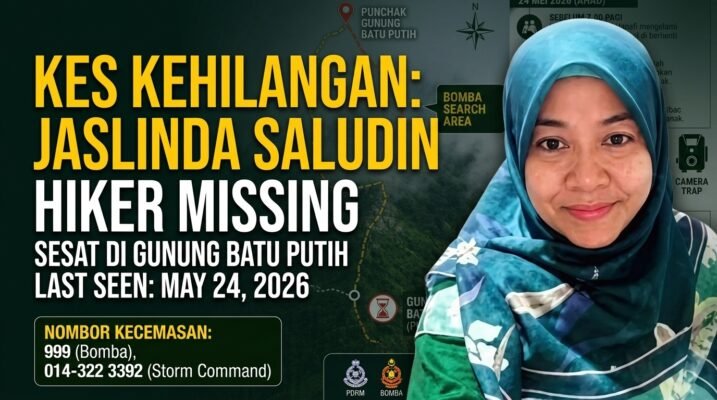
Lost in the Malaysian Jungle: Lessons from Jaslinda’s Disappearance at Gunung Batu Putih
Reading Time: 8 minutes
Jun
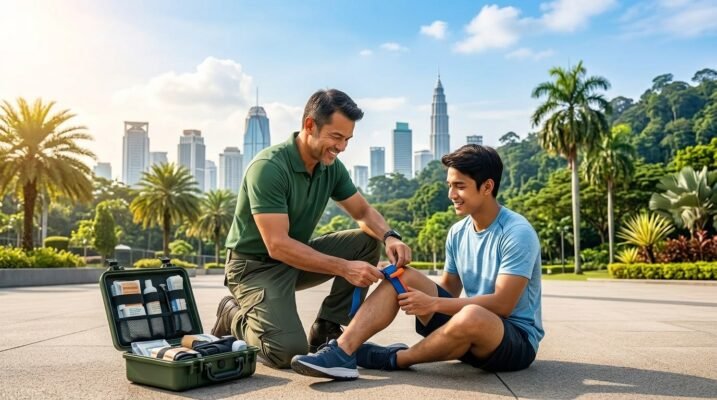
First Aid for Remote Areas in Malaysia | Austere Medicine Survival Guide
Reading Time: 5 minutes
Apr
Suggested Related Products