Bug Out Bags & Evacuations
Car Emergency Kit for Malaysian Highways | Monsoon & Breakdown Preparedness


 Share this Article:
Car Emergency Kit for Malaysian Highways
A breakdown during monsoon rain, highway heat, or long-distance travel can turn dangerous quickly. This guide helps Malaysian drivers prepare a practical car emergency kit for roadside safety, breakdown response, heat management, medical needs, and flood-season travel.
What This Guide Covers
- Essential car safety and signalling items for Malaysian roads
- Medical, hydration, monsoon, and heat-management supplies
- Step-by-step breakdown response protocol
- Quarterly inspection and pre-highway travel checklist
Why Malaysian Highways Demand Specific Preparation
Malaysian driving conditions change quickly. Heavy rain can reduce visibility, flash floods can block roads, heat stresses batteries and tyres, and long highway stretches may leave you waiting for help longer than expected.
- Monsoon flooding: Roads can flood quickly, especially underpasses and low-lying areas.
- Long highway stretches: A breakdown between exits or rest stops can mean hours of waiting.
- Heat stress: High temperatures affect engines, tyres, batteries, and passengers.
- Traffic gridlock: One accident can trap vehicles for hours.
- Communication gaps: Some routes have weak mobile coverage or overloaded networks during incidents.
Preparedness Principle: Your car kit should help you stay visible, hydrated, safe, and contactable while waiting for recovery, rescue, or safe movement.
Complete Car Emergency Kit
Tier 1: Safety & Signalling
High-Visibility Items
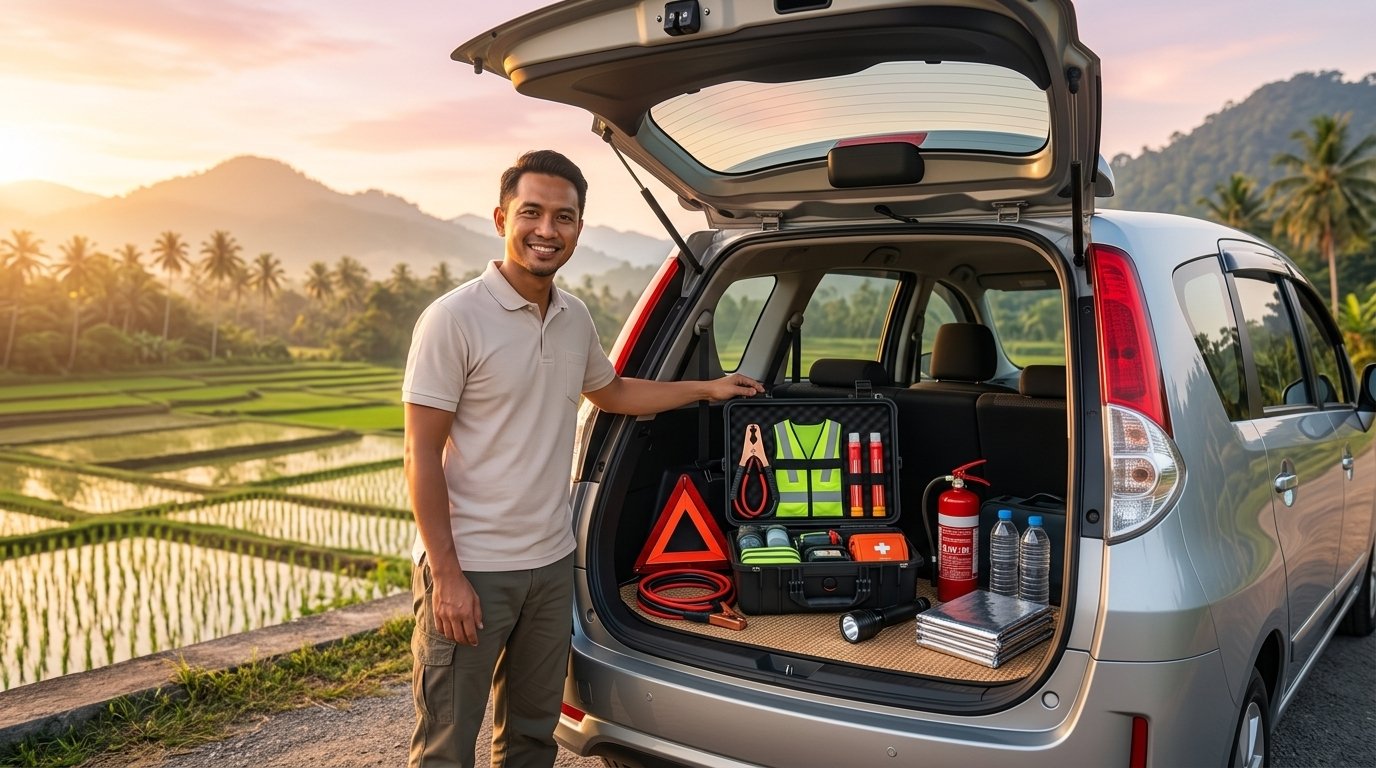
- Safety triangle: Place behind your vehicle to warn approaching traffic.
- Reflective vest: Wear before stepping out of the car.
- LED flashlight: For night visibility and inspection.
- Glow sticks: Battery-free backup marker for night breakdowns.
Communication
- Phone charger: Keep a dedicated cable in the car.
- Power bank: Useful if the car battery dies.
- Printed emergency contacts: Family, insurance, roadside assistance, police, towing, clinic, and workshop.
- Roadside assistance details: Keep membership number and hotline printed.
Basic Tools
- Jumper cables or jump starter: Battery failure is common in heat.
- Tyre repair kit: Temporary support until you reach a workshop.
- Basic tool set: Screwdriver, pliers, adjustable wrench, gloves, and tape.
- Spare tyre tools: Confirm jack, lug wrench, and spare tyre are present and usable.
- Engine coolant: Useful during overheating situations.
Tier 2: Medical & Survival
First Aid
- First aid kit: Bandages, gauze, antiseptic, plasters, gloves, scissors, and tape.
- Burn gel: Useful for minor burns from engine parts, hot surfaces, or accident-related injuries.
- Triangle bandage: Useful for sprains, slings, and emergency support.
- Saline or eye wash: For dust, smoke, or debris irritation.
Hydration & Heat
- Water: Keep at least 2–3 litres, rotated regularly.
- ORS sachets: Important during heat, sweating, vomiting, or diarrhea.
- Cap or hat: Protection when standing outside in sun.
- Small towel: Can be dampened for cooling.
- Sunscreen: Useful during long roadside waits.
Medications
- Paracetamol: Fever and pain support.
- Antihistamine: Bites, allergies, and rashes.
- Anti-diarrhea medicine: Use appropriately and avoid if fever or bloody stool is present.
- Anti-nausea support: Helpful for motion sickness or stress nausea.
- Personal medications: Keep a small emergency buffer where appropriate.
Insect & Hygiene
- Insect repellent: Especially useful if stranded near drains, fields, or rural roads.
- Hand sanitizer: Clean hands before eating or treating wounds.
- Wet wipes: Hygiene during long delays.
- Plastic bags: Waste, wet clothes, emergency toilet use, or separating dirty items.
Tier 3: Comfort & Utility
Weather Protection
- Compact umbrella: Useful during monsoon breakdowns.
- Emergency poncho: Keeps you dry while inspecting the car or waiting outside.
- Light blanket: Useful at night, during shock, or for children.
- Paracord: Repairs, tying, hanging, or securing items.
Food & Waiting Supplies
- Granola bars: Quick calories with no preparation.
- Crackers or biscuits: Familiar and shelf-stable if rotated.
- Peanut butter sachet or small jar: High-calorie backup.
- Instant drinks: Useful for morale and hydration.
Repair & Miscellaneous
- Duct tape: Temporary repair for hoses, panels, packaging, or cracked parts.
- Spare fuses: Useful for simple electrical issues.
- Microfibre cloth: Wipe fog, spills, mirrors, or windscreen interior.
- Small notebook and pencil: Write down accident details, tow truck number, or instructions.
Monsoon-Specific Preparation
Before Monsoon Season
- Test battery: Replace weak batteries before heavy rain season.
- Replace worn wipers: Visibility is safety.
- Check tyres: Tread depth and pressure matter on wet roads.
- Check spare tyre: Inflate and confirm tools are present.
- Check lights: Headlights, brake lights, reverse lights, and hazard lights.
- Inspect seals: Look for water leaks around windows, doors, and boot.
- Top up fluids: Oil, coolant, brake fluid, and washer fluid.
During Monsoon Season
- Avoid flooded roads: Turn around if unsure of depth.
- Drive slower: Increase following distance on wet roads.
- Use headlights: Improve visibility to others.
- Monitor weather: Delay non-essential travel during severe warnings.
- Keep fuel above half tank: Traffic delays and detours can extend journeys.
What to Do If Stranded on the Highway
First 5 Minutes
- Switch on hazard lights immediately.
- Move to a safer shoulder or emergency lane only if possible.
- Put on reflective vest before exiting.
- Place safety triangle behind the vehicle if safe to do so.
- Call roadside assistance, insurance hotline, or emergency services if needed.
- Share your location using highway marker, GPS pin, nearby exit, or landmark.
Next 30 Minutes
- Assess safely: Do not stand near fast-moving traffic.
- Stay inside if safer: Especially during heavy rain or night traffic.
- Hydrate: Sip water regularly in hot weather.
- Prepare documents: Road tax, insurance, ID, and assistance information.
- Keep phone battery: Reduce screen use and keep power bank ready.
Long Waits
- Manage heat: Crack windows if safe, use towel, drink water, and avoid unnecessary movement.
- Protect children and elderly: Keep them seated, hydrated, and calm.
- Use lights wisely: Conserve battery while staying visible.
- Document the situation: Take photos if accident or insurance claim is involved.
Complete Car Emergency Kit Cost Breakdown
Suggested Budget
- Safety equipment: reflective vest, triangle, flashlight, glow sticks
- Basic tools: jumper cables, tyre kit, gloves, tape, spare fuses
- First aid and medication pouch
- Water, ORS, snacks, and hygiene supplies
- Umbrella, poncho, towel, blanket, and document pouch
- Optional: roadside assistance membership or compact jump starter
Estimated Range: RM600–RM1,200 depending on what you already own and whether you add a jump starter or roadside membership.
Highway Travel Checklist
Before Long-Distance Driving
☐ Battery checked ☐ Tyre pressure checked, including spare tyre ☐ Wiper blades working ☐ Engine oil level checked ☐ Coolant level checked ☐ Brake fluid checked ☐ Lights and hazard lights working ☐ Jack and lug wrench present ☐ Emergency kit packed ☐ Phone charged and power bank packed ☐ Fuel tank at least half full ☐ Printed emergency contacts availableGet Your Car Emergency Kit Checklist
Complete packing list with supplier information, estimated item costs, monsoon preparation schedule, and step-by-step breakdown response protocol. Print and check off items.
Download Free Resources
Your car is a shelter only if it is prepared.
By Dr. Preppers, your emergency preparedness guide.
Presented by Preppers MY · www.preppersmy.com
Suggested Reads

Walkie-Talkie Buyer’s Guide for Malaysian Families | Emergency Communication
Reading Time: 6 minutes
Apr

Financial Preparedness for Malaysian Families | Cash, Inflation & Currency Protection
Reading Time: 5 minutes
Apr
Home Water Storage in High Humidity Environments | Malaysian Water Guide
Reading Time: 5 minutes
Apr
Complete Home Medical Kit for Malaysian Tropical Diseases | Emergency Preparedness
Reading Time: 5 minutes
Apr
Home Borewell Installation for Water Independence | Secure Your Family’s Water Supply
Reading Time: 5 minutes
Apr
7.8 Earthquake Strikes Southern Philippines — What Malaysian Families Must Know Right Now
Reading Time: 4 minutes
Jun
From Classroom to Water Independence | Building a 6-Month Water Supply in Malacca
Reading Time: 5 minutes
Apr

Family Evacuation Plans in Urban Malaysia | Routes, Meeting Points & Communication
Reading Time: 5 minutes
Apr
90-Day Preparedness Plan for Malaysian Families | Build Real Resilience
Reading Time: 3 minutes
May
Blackout Ready: Why Every Malaysian Home Needs a Portable Power Station in 2026
Reading Time: 5 minutes
May


Building Prepper Community in Malaysia | Resilience Through Neighbours & Local Networks
Reading Time: 5 minutes
Apr

Nik Muhammad Hafiz: Building Malaysia’s Preparedness Movement | Preppers MY
Reading Time: 4 minutes
May
5 Economic Threats in 2026 That Could Change Your Life in Malaysia — And What to Do About It Now
Reading Time: 4 minutes
May
Car Emergency Kit for Malaysian Highways | Monsoon & Breakdown Preparedness
Reading Time: 4 minutes
Apr
First Aid for Remote Areas in Malaysia | Austere Medicine Survival Guide
Reading Time: 5 minutes
Apr
72-Hour Bug Out Bag for Malaysian Families | Tropical-Ready Evacuation Guide
Reading Time: 6 minutes
Apr

Preparedness Through Gardening | Building Family Resilience Naturally
Reading Time: 4 minutes
Apr

From Viral Videos to Community Awareness | Building Preparedness in Malaysia
Reading Time: 3 minutes
May
South China Sea Geopolitical Crisis | How Malaysian Families Can Prepare
Reading Time: 5 minutes
Apr
Suggested Related Products